

Master English with a Smart, Skill-Based Study Strategy
"English is scoring, just write neatly and you'll get marks."
If you've ever heard this from someone well-known right before your exams, you already know how untrue it is. Ask any Class 9 to 12 student who's stared at a reading passage with five sub-questions and a 15-minute clock or tried to remember the difference between a "Clause" and a "Phrase" for the 100th time, or attempted a literature answer that somehow came back with "lacks textual reference" scrawled across it in red ink. English isn't the free-scoring subject everyone claims it is. It's a subject with its own syllabus, its own traps and its own study plan by subject-and most students never get one.
Here's the good news: English breaks down into exactly three skill zones-Reading, Grammar, and Literature Answer-Writing-and each one responds beautifully to a focused, step-by-step exam strategy. You don't need to "get better at English" in some vague, mystical way. You need a system. Let's build one.
Why English Quietly Costs You Marks
Think about your last English paper. Chances are you didn't fail to understand the passage-you understood it fine, but you lost marks because your answer didn't match what the examiner was scanning for. Or you knew the grammar rule but froze when the question twisted it into a new format. Or you loved the chapter, understood the character, and still lost marks because your answer read like a summary instead of an analytical response.
This is the pattern across Class 9 to 12: it's rarely a knowledge gap. It's an answer-writing gap. And that gap is exactly what a proper subject wise study strategy is meant to close. For which a student actually need to prepare in Expert Mode.
Step 1: Fix Reading Comprehension First (It Sets the Tone for the Whole Paper)
Reading comprehension is usually the first thing you attempt in the exam, which means a shaky start here rattles your confidence for everything after it. Fix this first.
The step-by-step approach:
Example: A Class 10 student attempting an unseen passage on climate change might write "the author believes we should act" when the actual question asks for the specific reason given in paragraph 2. That's a full mark lost to imprecision, not ignorance. Practising comprehension passages from previous years' papers or from a structured CBSE sample paper set trains you to spot exactly this trap before the real exam does.
Step 2: Make Grammar a Habit, Not a Last-Minute Cram
Grammar is the most "learnable" part of English-there's no ambiguity, no interpretation, just rules. Which is exactly why it's the most wasteful section to lose marks in.
The step-by-step approach:
Example: A Class 12 student writing a formal email or report often loses marks not for content but for small grammar slips under time pressure-a wrong tense in the opening line, a missing article in the subject. Timed practice with a workbook built specifically around the current CBSE English syllabus trains exactly this kind of accuracy-under-pressure, which no amount of "just knowing the rule" can substitute for.
Step 3: Literature Answer-Writing-Where Most Marks Are Actually Lost
Here's the part students underestimate the most. You can love a chapter, understand the character deeply, discuss it fluently with your friends-and still write an answer that scores 3 out of 5 because it isn't structured the way examiners are trained to reward.
The step-by-step approach:
Example: Ask two Class 9 students to answer "What did Lencho's letter reveal about his character?"-one writes a summary of the story, the other opens with "Lencho's letter reveals a man of unwavering faith, evident in [specific reference]..." and builds from there. Same understanding, very different marks. That difference is a formula, and it's teachable-it's exactly what structured answer-writing practice with CBSE-aligned literature workbooks is built to train.
Build Your Weekly English Study Plan. Put these three zones into a simple weekly rhythm rather than cramming them all before an exam:
This is what a real study plan by subject looks like-small, consistent, and specific to how English is actually tested, not how it "feels" like it should be studied.
Your Actionable Takeaway
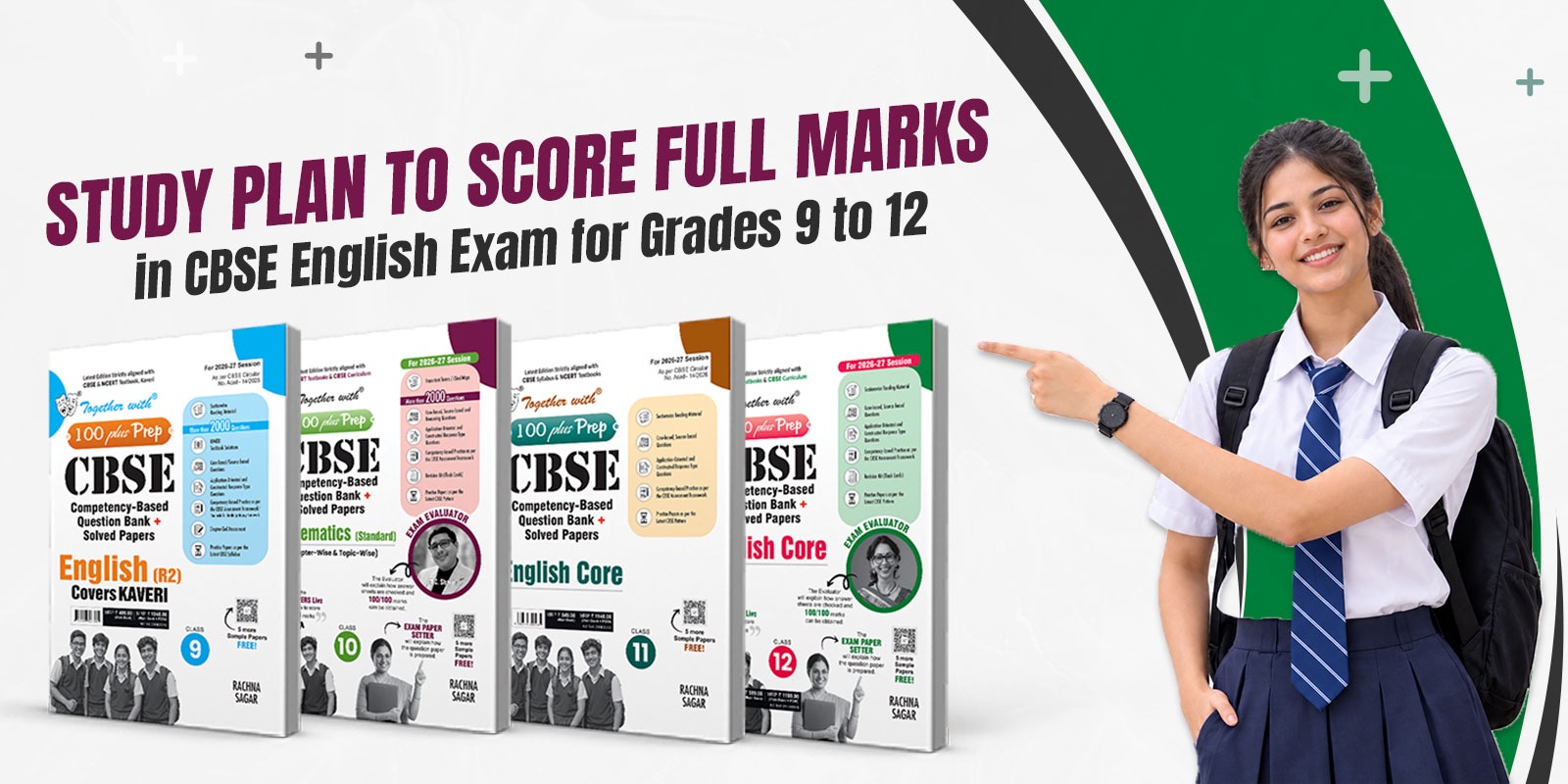
You don't need more English "content"-you've been reading, writing, and speaking it for years. What you need is exam-specific practice: passages that mirror the actual paper pattern, grammar drills that match your class's syllabus, and literature answers checked against how examiners actually score. That's precisely the gap that well-structured, CBSE-syllabus-aligned books and sample papers are designed to close-one topic, one class level one skill at a time.
If you're serious about turning English from a "hopefully scoring" subject into a genuinely high-scoring one, it's worth building your practice around resources made for exactly this purpose. Explore Rachna Sagar's English Reference books, sample papers and class-wise study resources and give your next English exam the structured practice it actually needs-not just another night of last-minute revision.
Happy Learning!